Activities of daily living (ADLs or ADL) is a term used in healthcare to refer to people’s daily self-care activities. A few basic ADLs are:
Walking ability to get around the home or outside.
Feeding is the ability to get food from a plate into one’s mouth.
Dressing and grooming, ability to select clothes, putting them on, and adequately managing one’s personal appearance.
Toileting is the ability to get to and from the toilet, use it appropriately, and clean oneself.
Bathing is the ability to wash one’s face and body in the bath or shower.
Transferring is the ability to move from one body position to another. This includes being able to move from a bed to a chair, or into a wheelchair. This can also include the ability to stand up from a bed or chair in order to grasp a walker or other assistive device.
PRE-VOCATIONAL AND VOCATIONAL TRAINING:
Children with special needs generally grow into adults who still have special needs. Inattention to pre-vocational skills can seriously affect the special needs adult’s ability to enter the workforce and live a product, self-sustainable life. The introduction of skills that carry over into the workplace can positively impact special needs children when it comes to cognitive development, quality of life, and general well-being. The students learn varied skills according to their interests and capabilities.
TSWT provides training courses in:
Art & Craft -Making decorative bags, envelopes, cards, table mats, coasters, door mats, etc.
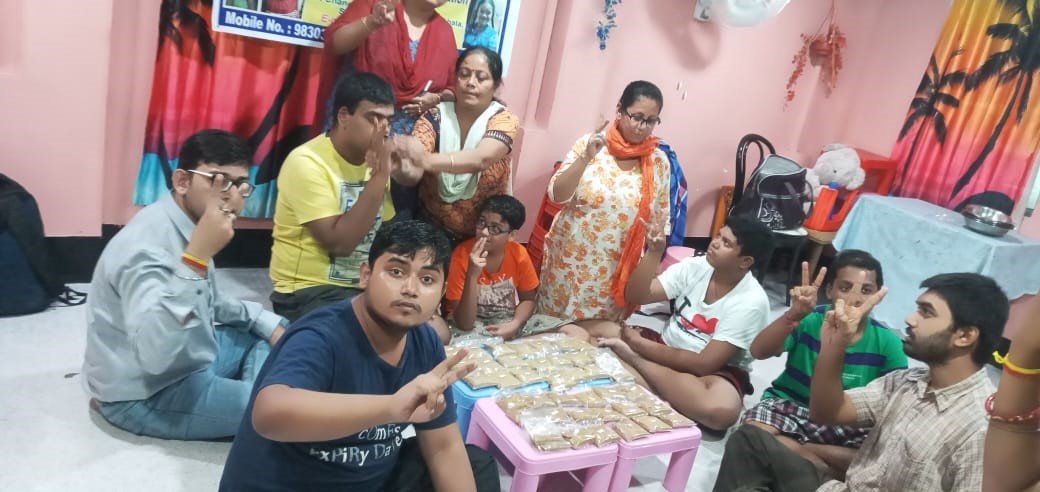
Masala grinding and packaging of various spices and pulses.
Stitching & knitting
Cultural Training
Block Printing
Candle Making
IEP (INDIVIDUAL EDUCATION PLAN):
An IEP is an Individualized Education Program written for a student who has a qualifying disability based on an evaluation. The IEP is based on the individual student’s needs and describes the special help the student will receive in school.